
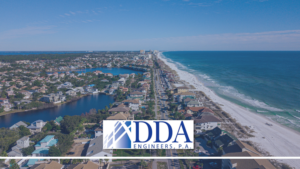
Constructing on Florida’s coast is not for the faint of heart. With hurricanes, saltwater exposure, and flood risks, every new build must rise to meet rigorous standards. Florida’s Building Code (FBC) sets requirements, creating a blueprint for safety, transforming harsh coastal conditions into challenges that inspire resilient, durable structures. From high-velocity wind resistance to corrosion prevention, here’s how coastal construction in Florida stands strong against the elements.
Built to Weather the Storm
In Florida’s High-Velocity Hurricane Zone (HVHZ), which includes Miami-Dade and Broward counties, hurricanes can bring winds capable of toppling the unprepared. The FBC specifies wind load requirements designed to withstand these conditions, factoring in building height, local exposure (open water, urban areas), and the probability of wind-borne debris.
Engineers calculate load-bearing requirements, often relying on impact-resistant materials and reinforced framing systems to withstand gale-force winds. Windows, doors, and other entry points require special attention, often reinforced with impact-resistant glass or shutters to prevent breaches. Roof designs, too, incorporate materials and anchoring techniques that allow them to resist high wind pressures. With each element engineered to exacting specifications, these buildings aren’t just sturdy; they’re built to meet the demands of coastal weather head-on.
Elevated for Protection
Florida’s coastlines are beautiful but flood-prone, especially during hurricane season. The FBC addresses this head-on with standards that require buildings within designated flood zones to sit above the Base Flood Elevation (BFE), reducing the potential for flood damage. This isn’t just about getting above the waterline; it’s about strategic design that accounts for storm surge and flood risk, safeguarding property, and public safety.
The Coastal Construction Control Line (CCCL) program takes flood prevention even further. The CCCL program regulates construction along vulnerable shoreline areas, limiting the impact of human development on natural storm barriers like beaches and dunes. Construction seaward of the CCCL must meet strict criteria for elevation, location, and materials to withstand storm impact and preserve these crucial natural buffers. The result is a well-rounded approach that reduces flood risks while respecting the delicate balance of Florida’s coastal ecosystems.
Saltwater Corrosion Prevention
Saltwater exposure is one of the most relentless threats to coastal buildings, causing materials to corrode faster and weakening structural integrity over time. The FBC takes a proactive approach to corrosion prevention, calling for corrosion-resistant materials like stainless steel fasteners and treated concrete with precise cover depths. These materials are chosen not only for their strength but for their ability to resist the effects of salt-laden air that would otherwise degrade metal and concrete over time.
Partner with DDA Engineers, P.A.
Regular inspections are a vital part of this structural ecosystem. It enables property owners to detect and address early signs of corrosion before they compromise the building’s structural integrity. With these measures, coastal buildings can endure for decades, keeping homes, businesses, and infrastructure resilient and secure despite constant exposure to saltwater.
Building on the coast demands a unique blend of innovation and precision, and DDA Engineers, P.A., is ready to bring that expertise to your project. We’re committed to creating resilient structures that meet Florida’s building codes and stand strong against the elements. To learn more about designing for coastal conditions, contact us at (305) 666-0711. Let’s build a stronger future together.

DDA Engineers, P.A.
Latest posts by DDA Engineers, P.A. (see all)
- Foundation Design Challenges in South Florida’s Limestone Terrain - April 14, 2026
