
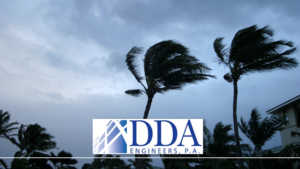
Hurricanes seem to be getting worse every year, leaving debris in their wake. As they tear through coastal communities, they test every connection, foundation, and load-bearing element of a building. While some damage is obvious, like a missing roof section or shattered windows, other structural issues can be more subtle but just as serious. A building that looks intact at first glance might be hiding dangerous weaknesses that could lead to failure down the line.
Initial Observations and Red Flags for Building Owners
Before calling in an engineer, building owners can perform a cautious, preliminary check for warning signs of structural damage. Look for:
- Cracks and Displacement – Diagonal cracks on walls, uneven floors, or foundation cracks wider than a quarter-inch can indicate structural shifting. Beams or columns showing bending or warping need immediate attention.
- Roof and Ceiling Damage – Missing shingles, sagging rooflines, and new water stains suggest that roof framing may be weakened. Even small leaks can compromise structural integrity over time.
- Doors and Windows Out of Alignment – If doors or windows suddenly stick or won’t close properly, it could be a sign that the building’s frame has shifted.
- Excessive Moisture and Mold – Water intrusion from storm surge or roof damage can cause wood rot, corrosion of metal components, and hidden structural weakening.
- Debris Impact – If large debris (trees, power poles, flying wreckage) struck the building, look for cracks, dents, or misalignment in nearby walls, columns, or roofing.
- Shifting Ground – Erosion, sinkholes, or new depressions near the foundation could mean the storm altered the soil beneath the building, affecting its stability.
If any of these red flags appear—or even if they don’t but the storm was severe—it’s time to bring in a structural engineer for a full assessment.
What Structural Engineers Look For
A professional structural assessment goes beyond surface-level damage. Engineers analyze how the storm impacted the building’s core stability, from foundation to roof.
- Visual Inspection – Engineers conduct a walkthrough, looking for structural deformations, water damage, and compromised load-bearing elements. They’ll document concerns and compare them to industry safety tolerances.
- Load-Bearing Systems Analysis – Foundations are checked for settling or cracking. Framing elements—columns, beams, floors, and roofing—are examined for loss of strength due to high winds or water damage. Engineers also inspect fasteners, welds, and structural connections to ensure they haven’t been sheared or corroded.
- Moisture and Material Testing – Moisture meters measure water content in wood framing to detect hidden rot. Concrete and masonry are checked for spalling, surface delamination, or salt damage, which can weaken their integrity over time.
- Non-Destructive Testing (NDT) – Ground-penetrating radar and ultrasonic scanning detect hidden cracks, rebar corrosion, or internal weaknesses in concrete without damaging the structure.
- Structural Calculations – Engineers may compare post-storm conditions to original design specifications, verifying whether the building still meets safety standards. If needed, they’ll perform load calculations to assess whether any elements need reinforcement.
- Final Report and Recommendations – The engineer provides a detailed report outlining all observed damage, required repairs, and reinforcement recommendations. This document is often necessary for insurance claims and local permitting for repairs.
Immediate Risks vs. Long-Term Concerns
Some damage requires urgent repairs, while other issues develop gradually:
- Immediate Hazards – A leaning wall, a sagging roof, or a severely cracked foundation needs immediate stabilization to prevent collapse.
- Long-Term Structural Degradation – Corrosion, rot, and slow foundation shifting can take months or years to show their full effects. Engineers flag these risks and recommend preventive action before they become emergencies.
Call an Experienced Structural Engineer
If your building has been through a hurricane, even if it looks fine, an assessment from a licensed structural engineer can confirm its safety—or identify hidden risks. DDA Engineers, P.A. has decades of experience evaluating storm-damaged structures and providing clear, actionable recommendations for repairs and improvements. Call (305) 666-0711 to schedule an assessment and ensure your building is safe for the long term.

DDA Engineers, P.A.
Latest posts by DDA Engineers, P.A. (see all)
- Foundation Design Challenges in South Florida’s Limestone Terrain - April 14, 2026
